
Some ideas resist easy explanation. They're complex or abstract, built from systems, processes, emotions or experiences that can't be photographed or summarised in a few lines of text. That's where animation earns its place.
We're wired to notice movement
Animation's hold on attention is rooted in human psychology. Long before we were reading reports or scrolling feeds, human brains were wired to detect movement – to identify threats, spot opportunities and make sense of the world in real time. That instinct hasn't softened. Motion still pulls at our attention before a single word has registered.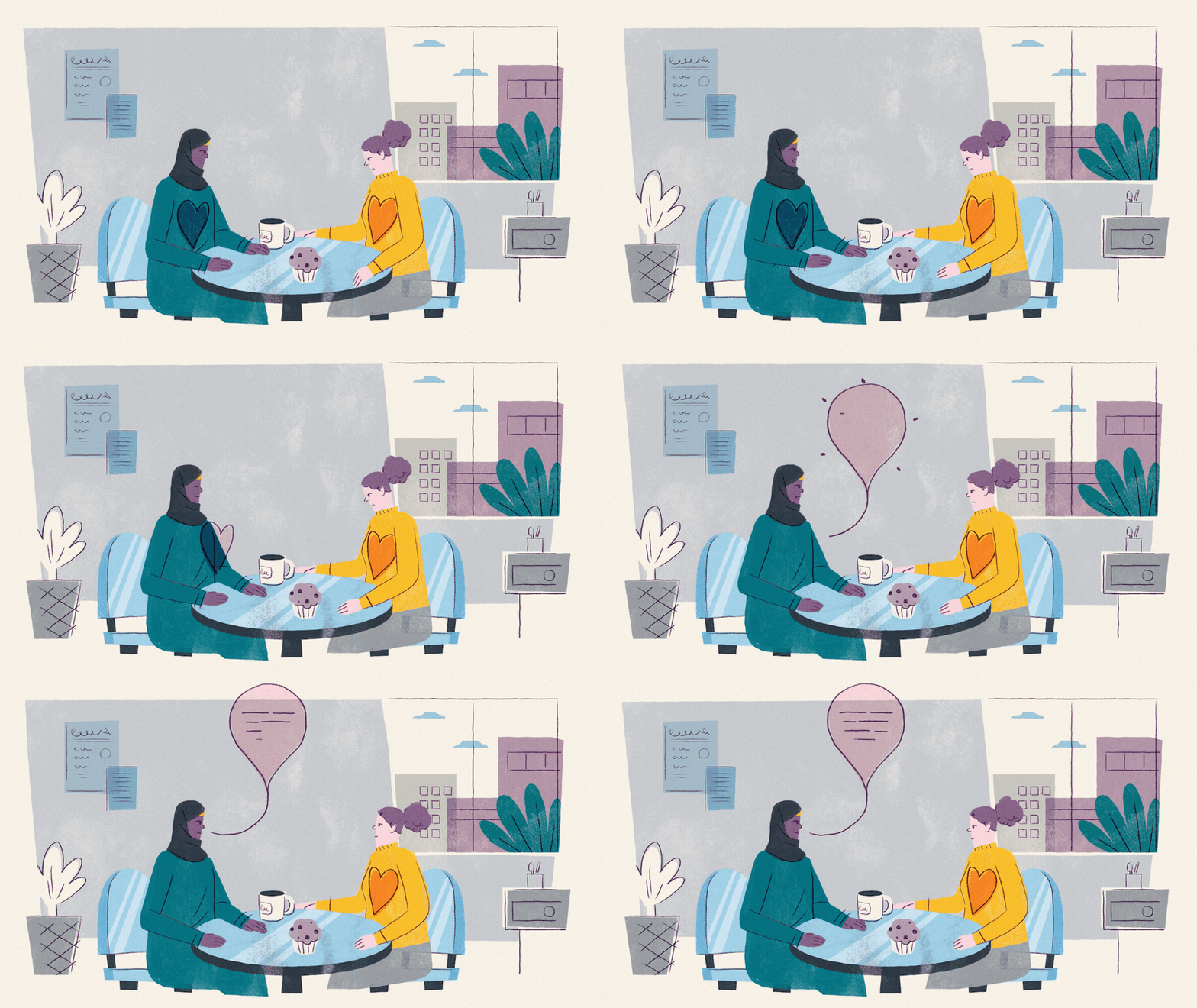
And we're wired to feel it, too
But our relationship with movement goes beyond attention. We don't just notice motion; we interpret it and feel it. We recognise struggle in something that strains, fragility in something that wobbles, tension in something that teeters on the edge of collapse. Long before we consciously analyse what we're seeing, movement has already shaped our emotional response.
That's what makes animation so effective for communicating ideas that are otherwise difficult to grasp. Many of the concepts organisations need to convey are invisible: culture, trust, anxiety, systemic change, the way grief feels from the inside, the way inequality compounds quietly over time. These aren't things you can photograph or reduce to a neat diagram. Animation can give them form and behaviour. It can turn an abstract concept into something felt as well as understood, transforming ideas from concepts we grasp intellectually into experiences we connect with emotionally.
We can feel responsible
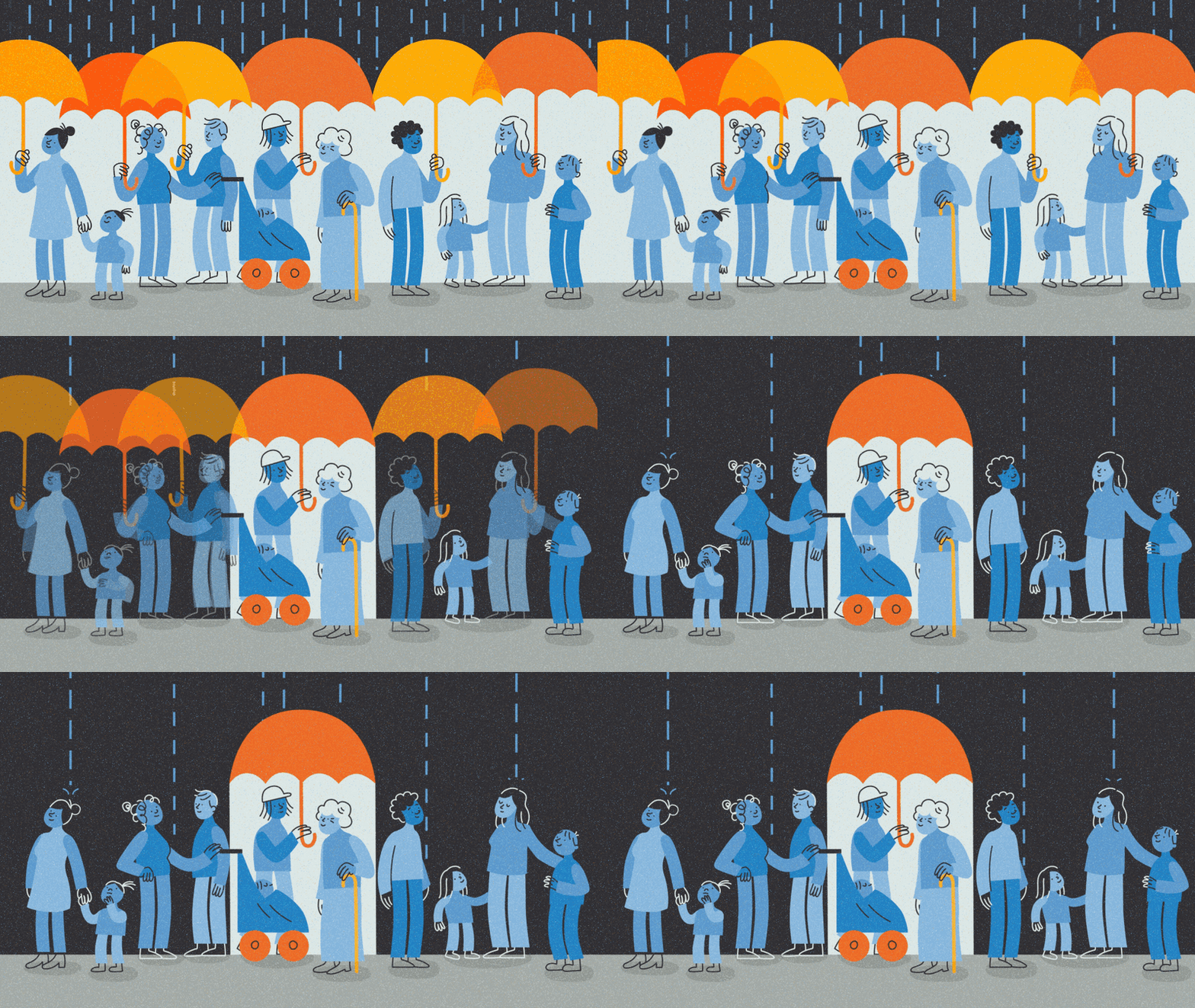
When the Oxford Vaccine Group came to us with a public health challenge – falling vaccination rates and the return of preventable diseases – the task wasn't simply to explain the science. It was to make collective responsibility tangible.
The solution was a simple visual metaphor: umbrellas. When enough of us raise them, they form a shared shield. When we don't, gaps appear and the rain gets through. In two minutes, a complex immunological principle became something people could see, understand and feel responsible for.
We can feel injustice
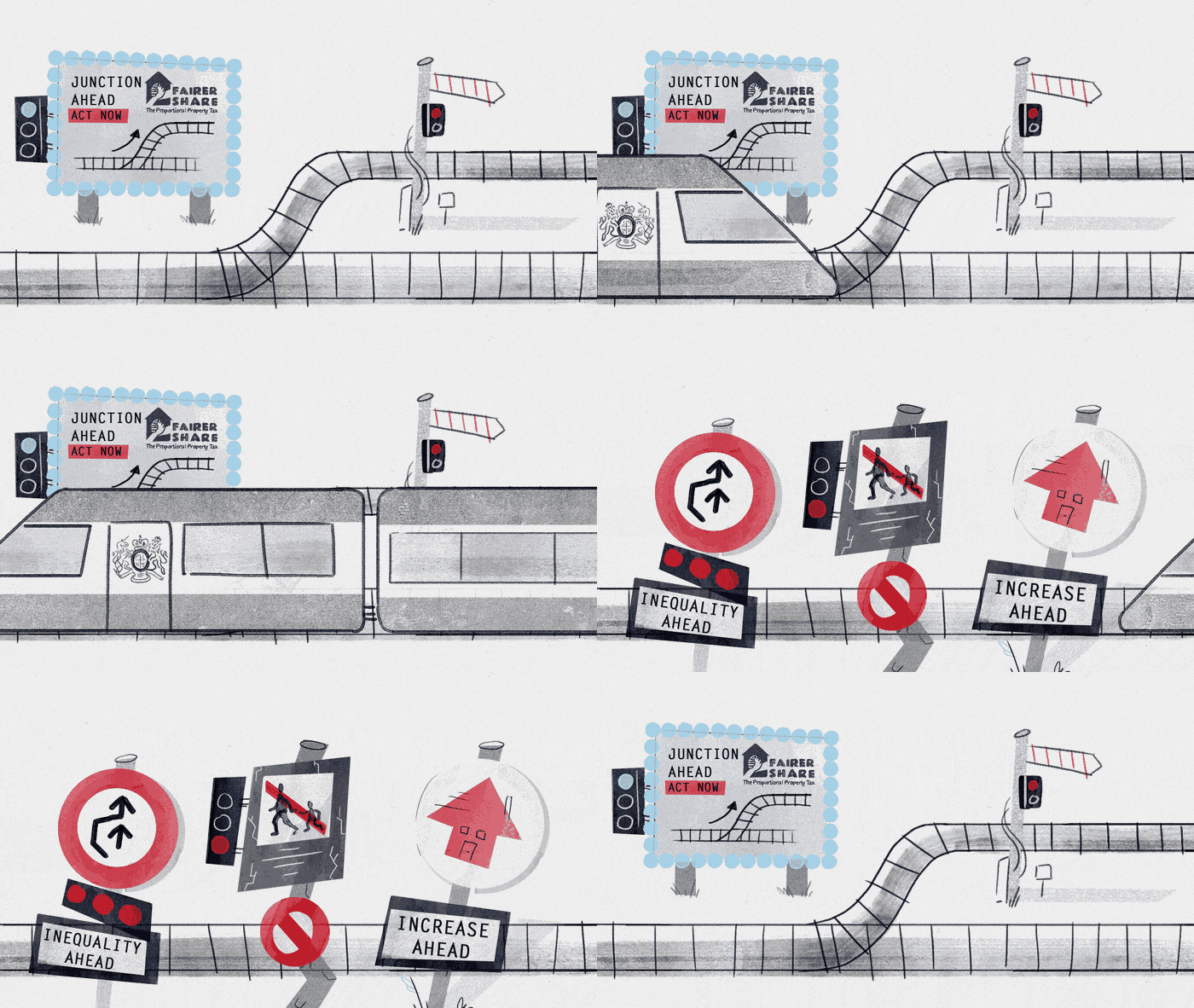 Perhaps the clearest proof of animation's emotional power is that it can make us care about subjects we normally wouldn't. Tax policy, for example, is not an obvious source of emotional engagement.
When we worked with Fairer Share on a campaign to reform property taxation, the challenge wasn't explaining the details. It was making the consequences feel real.
Using animation, we transformed an abstract policy debate into a story about fairness, imbalance and the choices that shape the society we live in. The numbers mattered, but it was the emotional argument that gave them meaning.
We can feel empathy
Neuroscientists have discovered that when we hear a story, our brains don't simply process information. We begin to simulate the experience itself. In a small but meaningful way, we feel what someone else feels. Animation gives us another route into that same emotional territory.
This was at the heart of a project we made with Oxford Sparks and clinical researcher Bryony Sheaves about hearing distressing voices – an experience that is often misunderstood, difficult to describe and profoundly isolating. The brief wasn't to explain the condition. It was to help people understand what it feels like to live with it.
Working closely with people who hear voices themselves, we used movement and visual metaphor to communicate what words alone struggle to capture: the uncertainty, the intrusion, the sense that your own mind has become an unreliable companion. The goal wasn't information. It was empathy.
The response that mattered most came from people with lived experience, who told us the animation felt true. That's the difference animation can make. It doesn't just help audiences understand a subject. It helps them step inside it.
And perhaps that's why clients are often surprised by the response animation receives. They commission it to explain something. What they don't always expect is that people will feel something too.
At its best, animation shortens the distance between one person's experience and another person's understanding. It turns abstract ideas into lived experiences and information into emotion.
That's why motion moves people.